INNOVADE representatives are today at the European Commission's High-Level Event on Democracy, one of the most significant EU gatherings on democratic resilience, disinformation, civic technology, and the future of digital democracy in Europe. Hosted at the Charlemagne building in Brussels, the event brings together European Commissioners, MEPs, national ministers, civil society leaders, media professionals, and civic technology innovators to shape the EU's democratic agenda. INNOVADE's presence places the project at the heart of this policy debate.
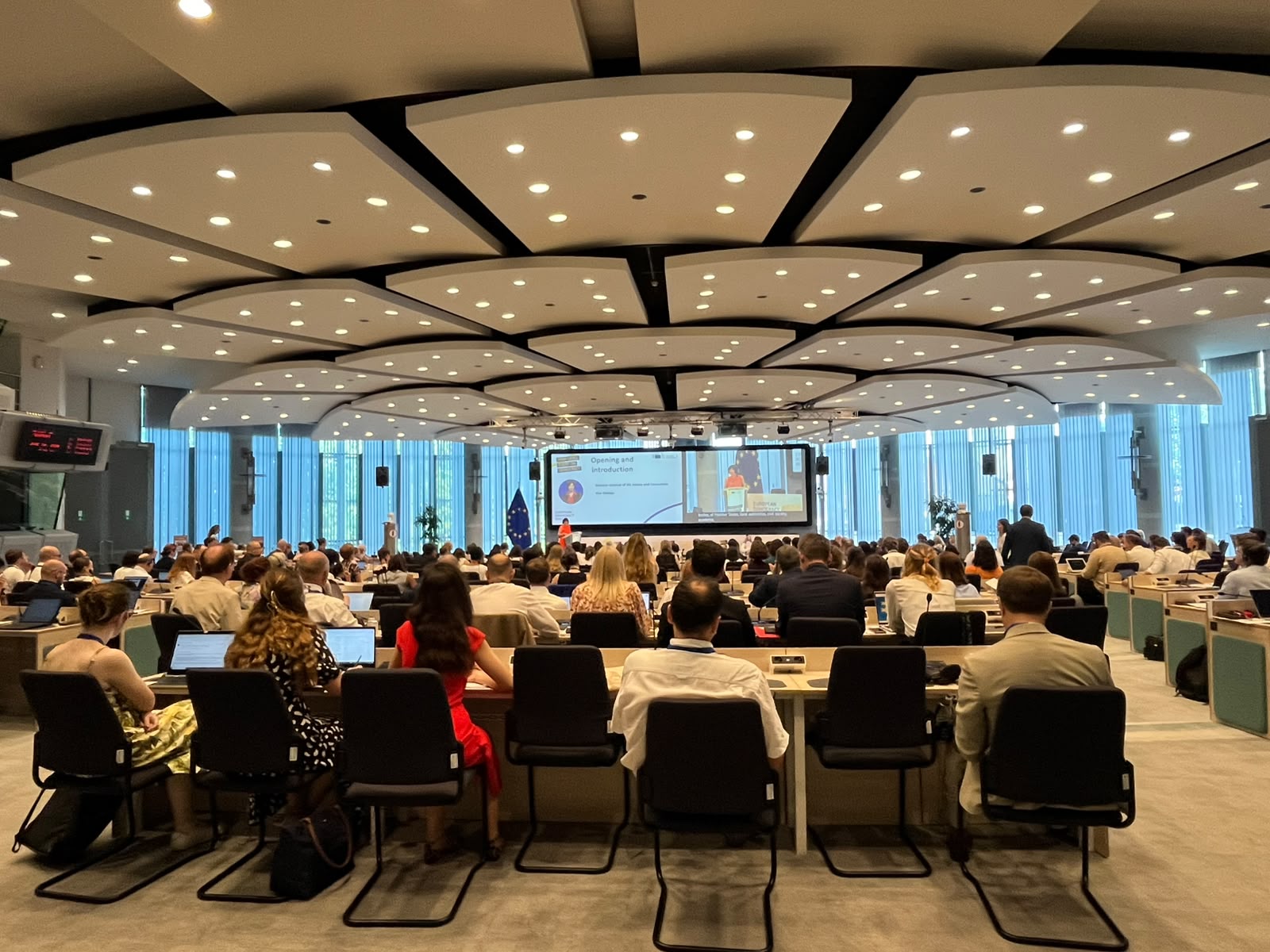
The European Democracy Shield is the Commission's flagship initiative to protect and strengthen democratic processes across the EU. It covers a wide-ranging set of priorities: countering foreign information manipulation and interference (FIMI), ensuring the safety of political elections, supporting free and independent media, and harnessing the potential of civic technology to deepen citizen engagement.
Commissioner Michael McGrath, responsible for Democracy, Justice, and the Rule of Law, underlined the EU's commitment to building democratic resilience at every level of society, from local municipalities to European institutions. Speaking on the eve of the inaugural meeting of the Network of National Authorities on Citizens' Participation — a key deliverable under the Shield, due to convene in Brussels on 25 June to bring Member State representatives together around local engagement and youth empowerment — McGrath put the message plainly: In Brussels and Member State capitals, leadership can be provided. But it is on the local level, in cities, towns, and rural areas, that democracy is saved.
The idea that democracy is built and defended locally surfaced repeatedly throughout the day. The opening panel, chaired by Ana Gallego, Director-General of DG Justice and Consumers, set the tone with a single line: democracy is thriving under pressure, and Europe's response must be structured, shared, and sustained.
MEP Tomas Tobé, the European Parliament's Rapporteur on the European Democracy Shield, who the day before had presented the Special Committee's findings and recommendations in the report Protecting European Democracy and Our Values, argued that the priority is now implementation, not invention. The tools and legal frameworks exist, the task is to make them work. Structures and instruments should be consolidated so that the Shield is strong and operational.
Stephen De Ron, the Committee of the Regions' rapporteur on the Shield, who anchored democratic resilience firmly at the local level, argued that it is local and regional actors who are the first to know when democratic participation is under threat, and the first to respond. Trust is built locally, through small things, and democratic resilience must grow from the ground up, not be imposed from the top down.
Moldova's State Secretary for European Affairs, Cristina Cerevate, added a perspective shaped by lived experience: democracy protection must be preventive. Speaking from a country navigating real democratic pressures while pursuing EU accession, her contribution underscored the Shield's importance beyond the EU's borders.
The session also surfaced a harder-edged dimension of the debate. Tobé warned that things will not get easier; AI-driven campaigns and information operations will intensify, and building social trust through political leadership is an investment that must be made now. Christian Moos of the European Economic and Social Committee put the sharpest question of the morning on the table — "Are we doing enough?" — and deliberately left it open.
For INNOVADE, a Horizon Europe project developing and testing inclusive digital democracy tools through co-creation Living Labs across Europe, today's discussions resonated directly. The project's work is grounded in exactly the approach the panel's most forward-looking voices called for: building trust at the local level, equipping citizens and public authorities with tools that are socially legitimate and technically sound, and addressing democratic challenges before they become crises.
The afternoon sessions turn to the challenges of AI in electoral processes and the potential of civic technology to deepen citizen participation, both areas where INNOVADE's research, its Digital Democracy Scoring framework, and its AI & Big Data Democracy Task Force are directly engaged.