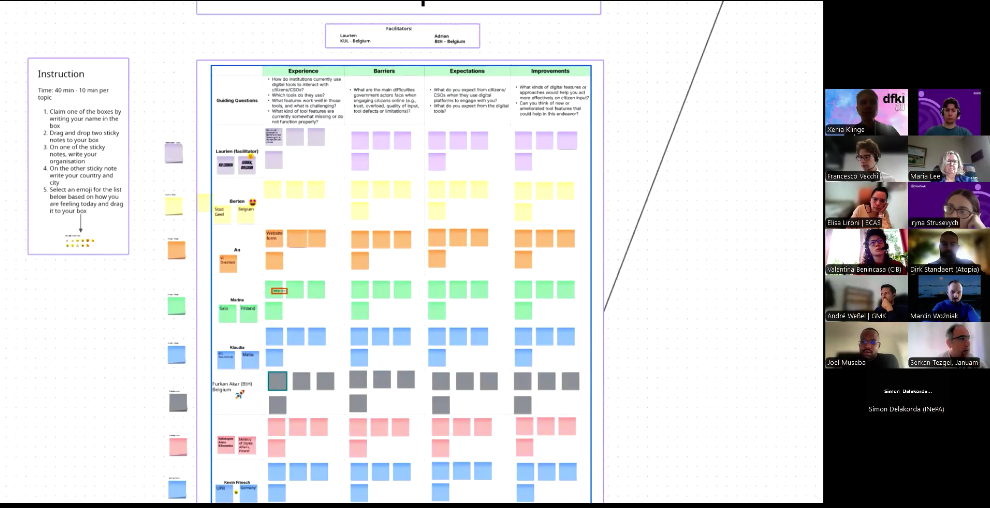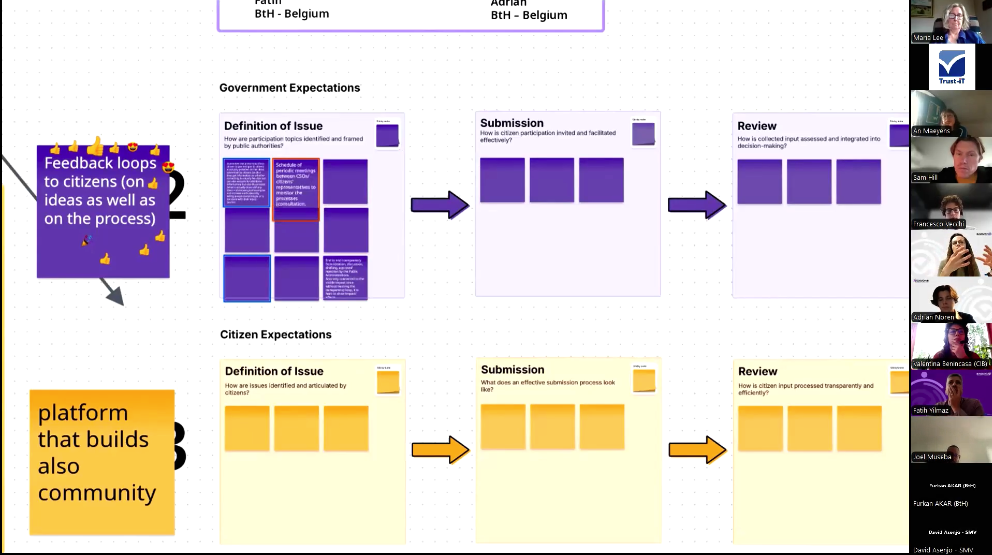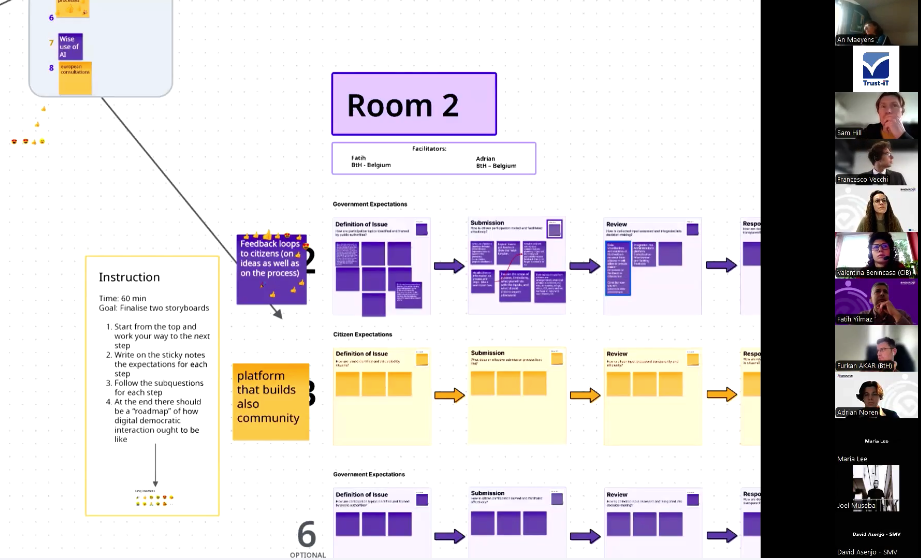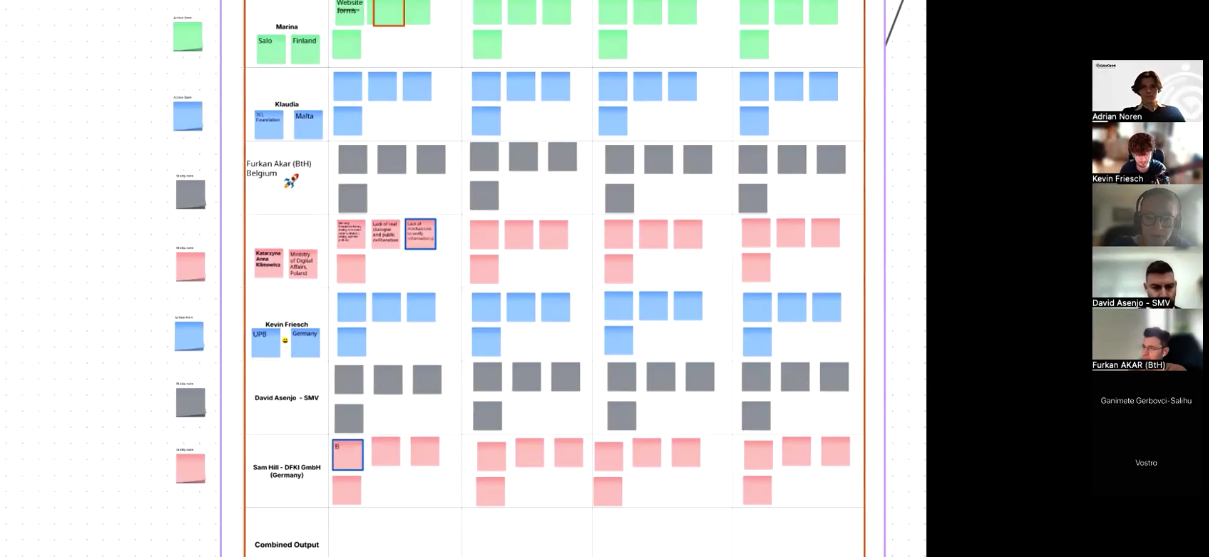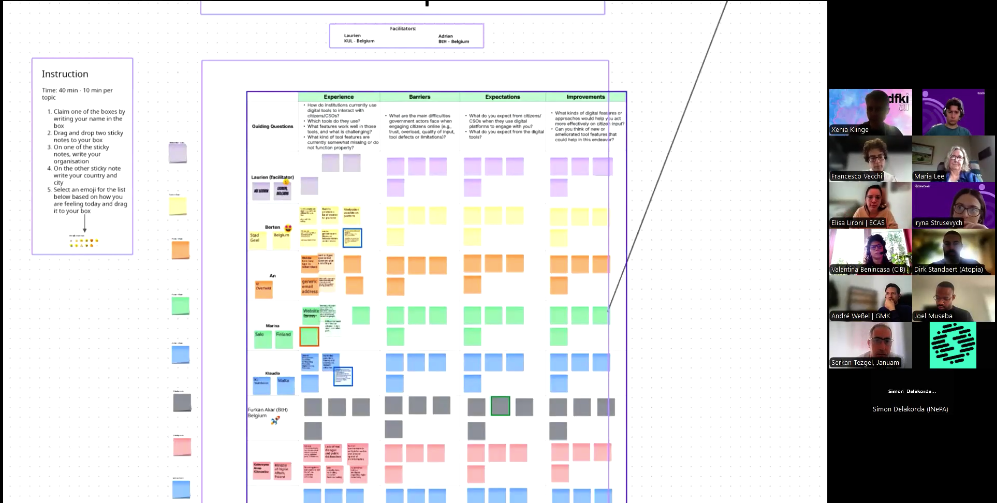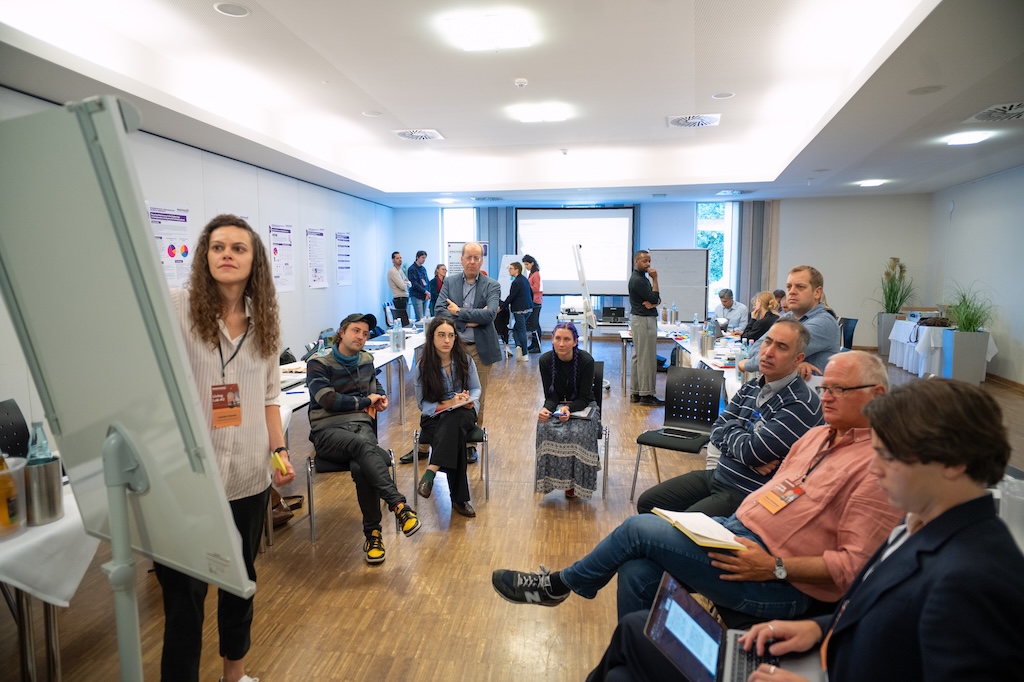
The findings from Living Lab 3 reveal significant frustrations and structural barriers regarding current digital democracy tools. Citizens reported that despite the availability of various platforms, they rarely see clear outcomes or institutional follow-through, leading to engagement fatigue and the perception that new tools are merely superficial fixes. Both groups noted severe accessibility and inclusivity issues; citizens experience a fragmented landscape that often excludes older adults and those with limited digital skills, while government institutions struggle to reach non-native speakers and broader demographics. Government representatives further emphasised the administrative inefficiency caused by disconnected channels—such as basic web forms and emails—which complicate data processing and contribute to a persistent feedback deficit.
To overcome these challenges, participants established that future digital democracy platforms must transition to a transparent "two-loop" communication model, ensuring that citizens not only submit input but also consistently receive status updates, decision rationales, and visible feedback on how their ideas shaped policy. There was also a strong consensus that platforms must prioritise a hybrid engagement approach, seamlessly connecting digital participation with trusted physical spaces—like libraries or neighbourhood workshops—to build real communities and prevent digital exclusion. Furthermore, participants highlighted the critical need for continuous digital and political education embedded within the tools, alongside the implementation of a unified, interoperable platform that leverages secure AI to assist with multilingual translations, administrative feasibility checks, and moderation.