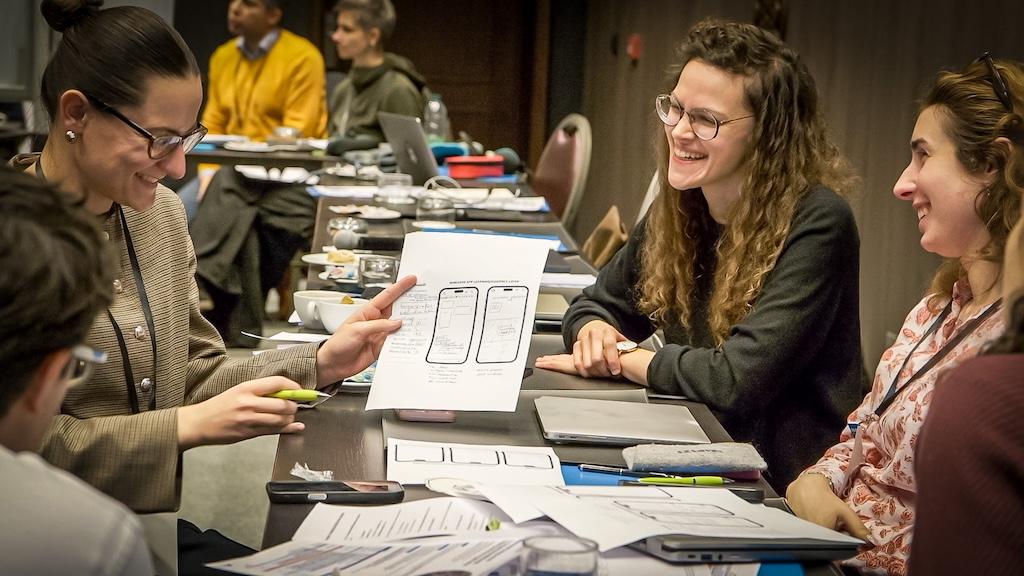
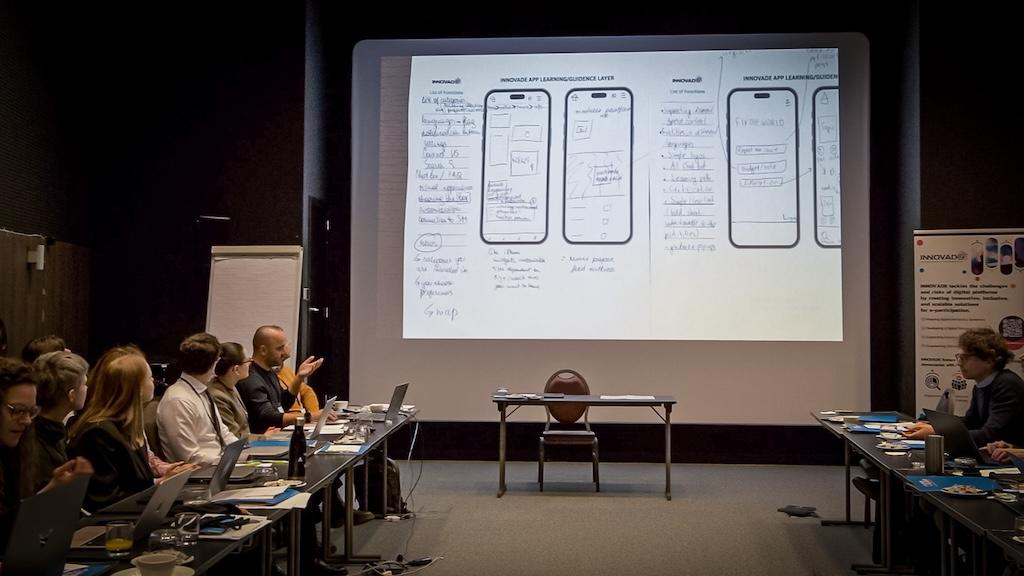
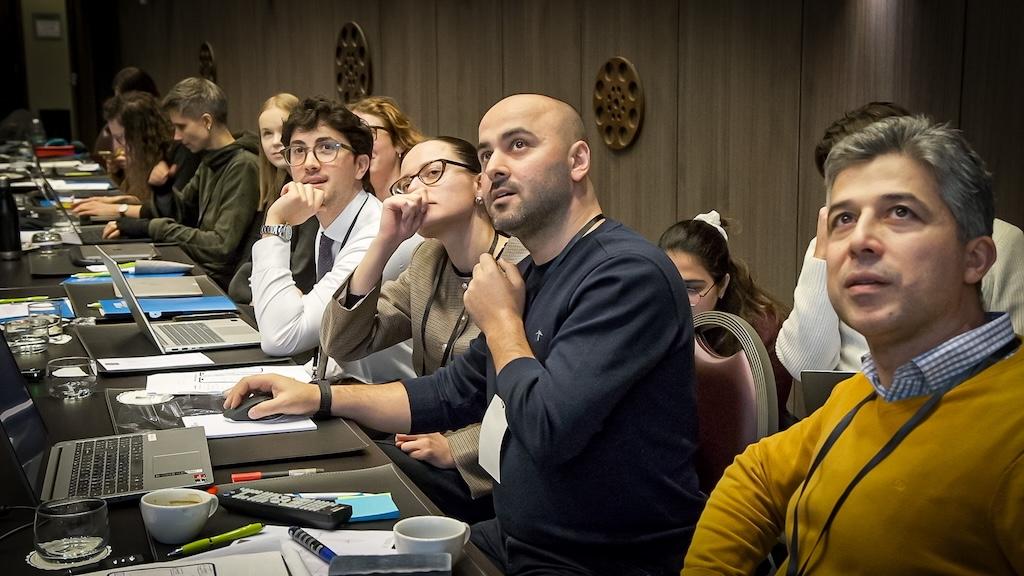
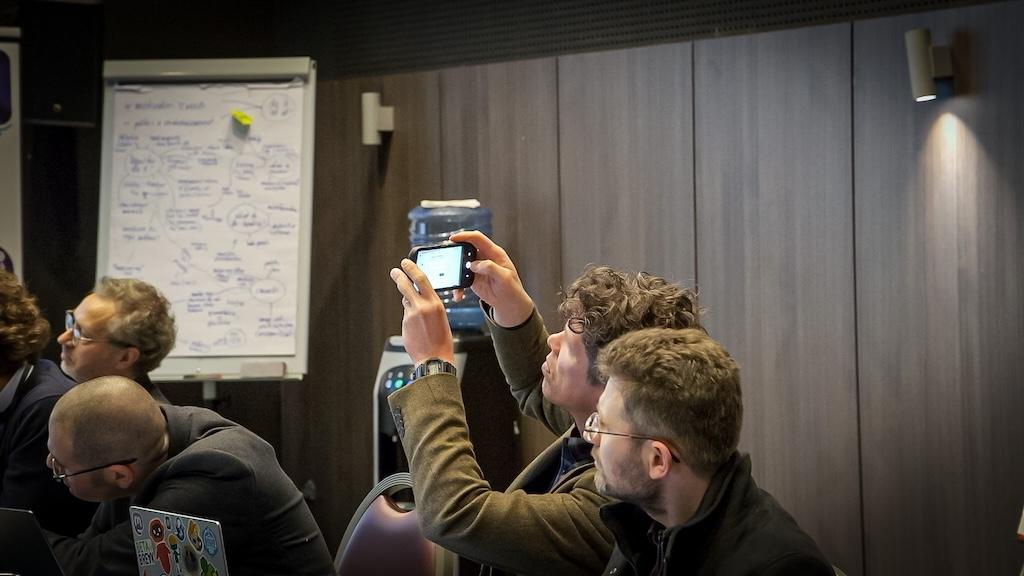
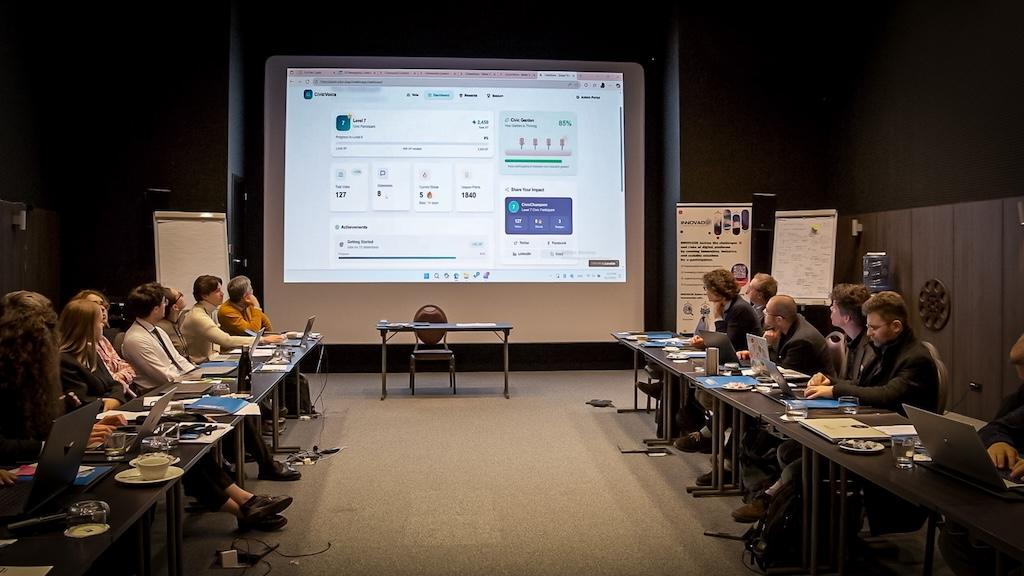
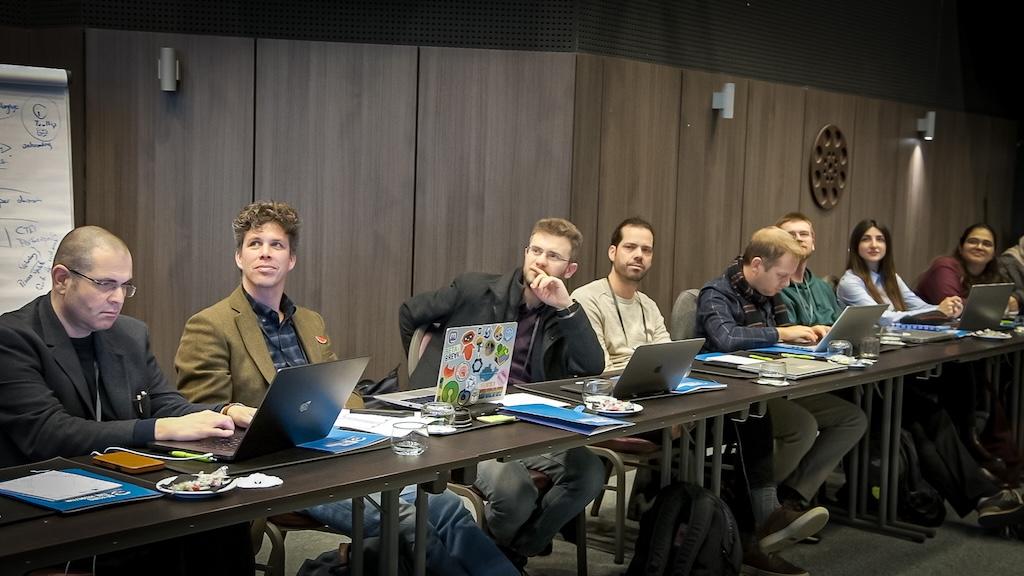
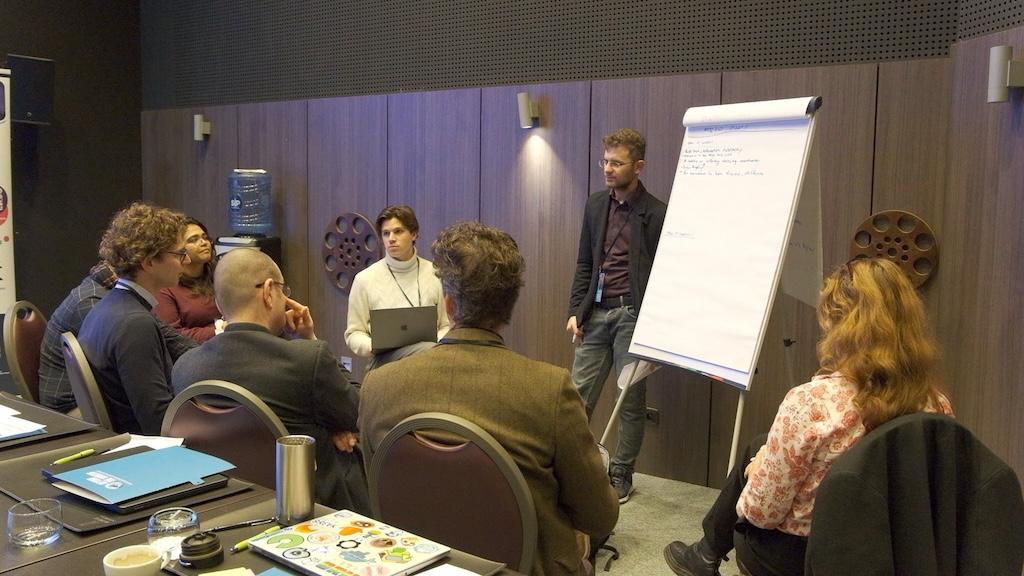
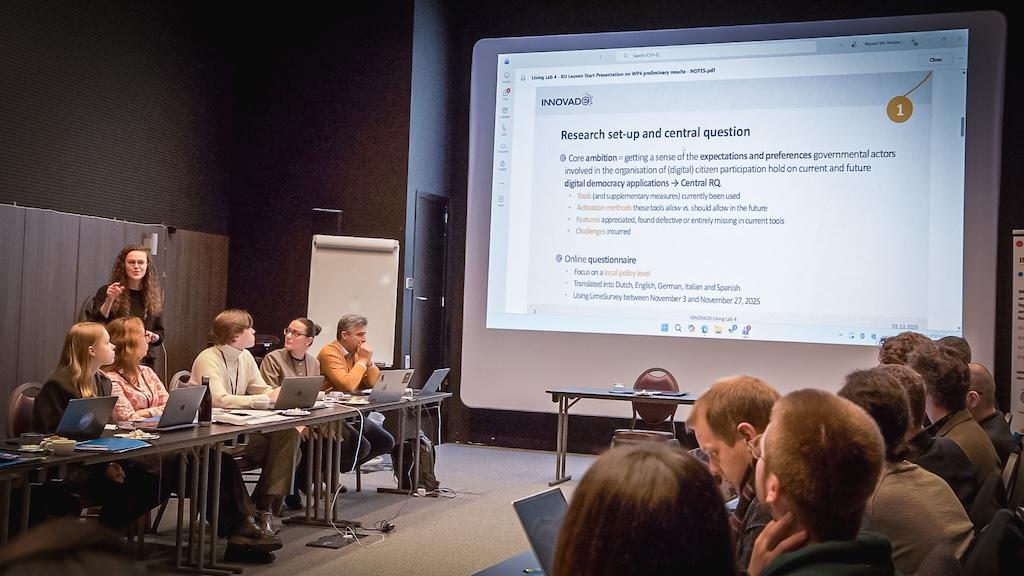
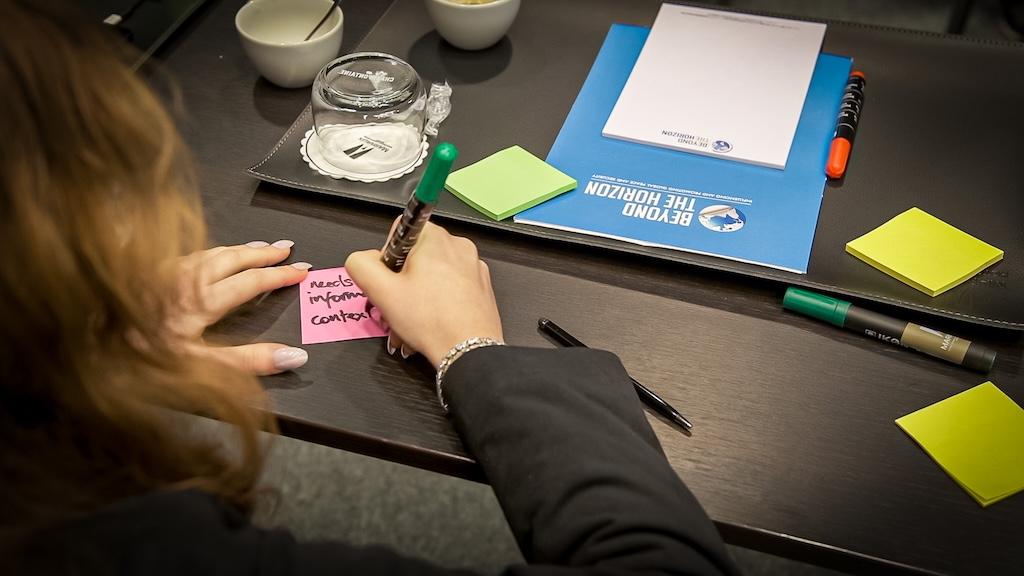
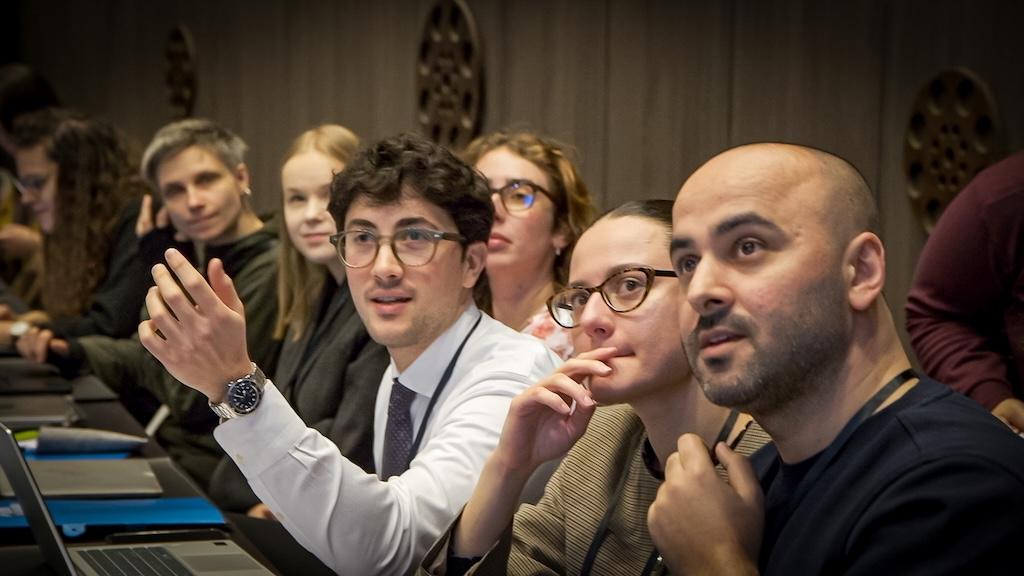
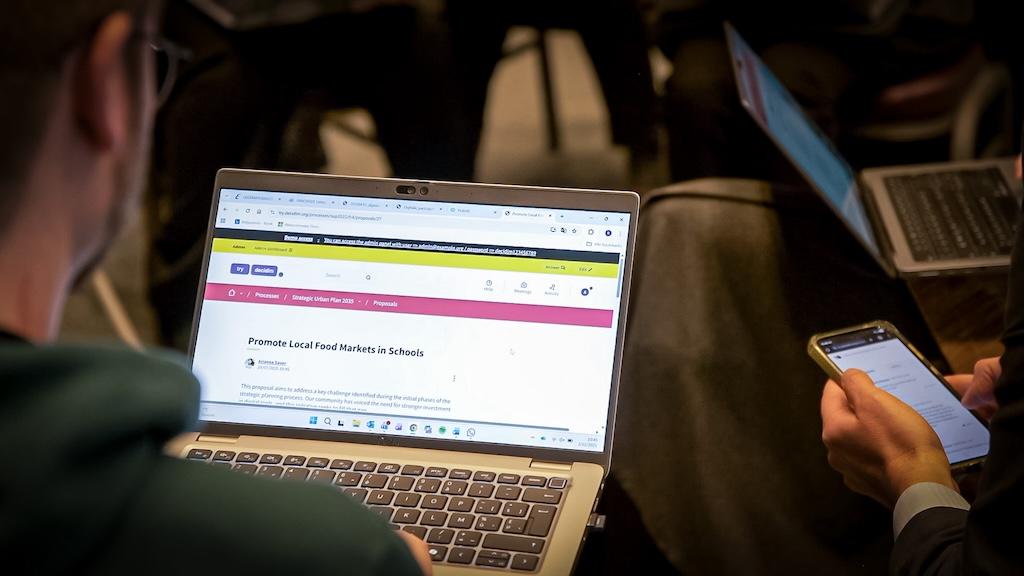
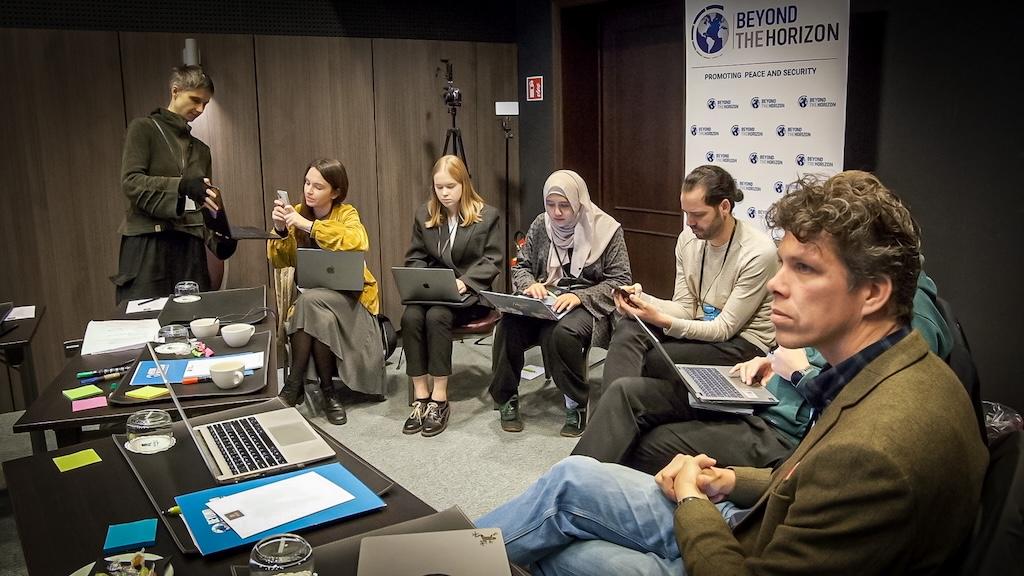
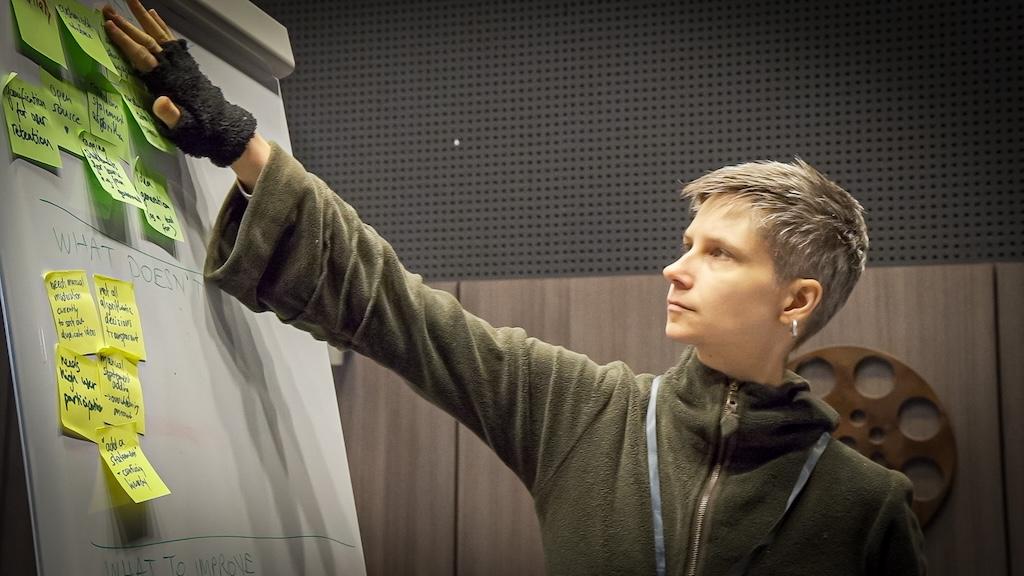
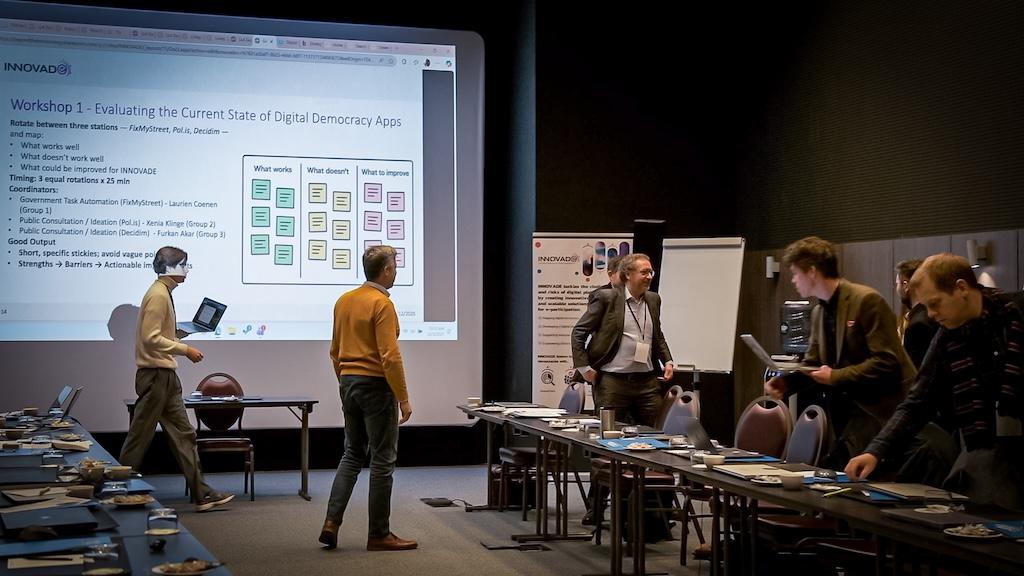
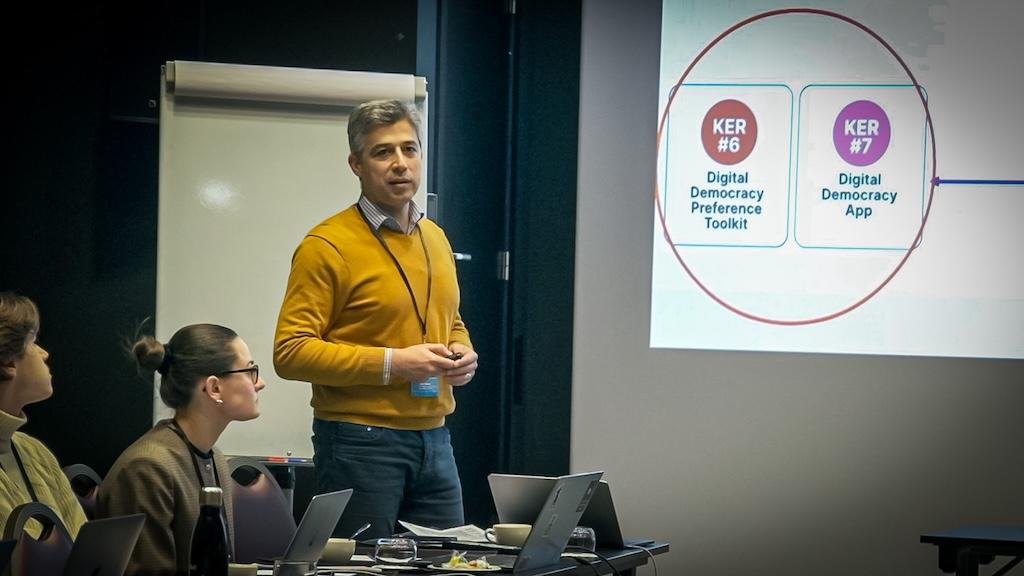
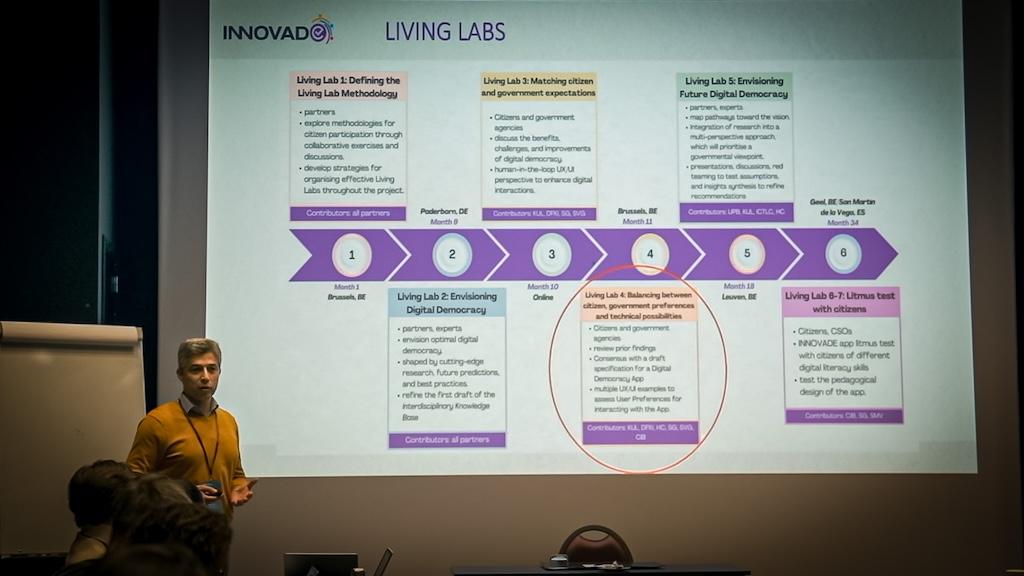
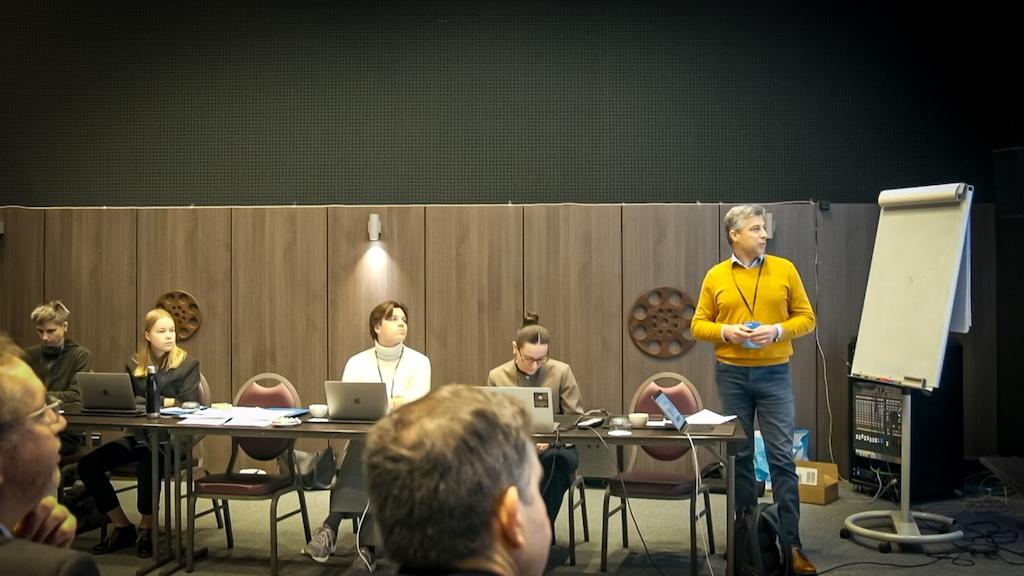
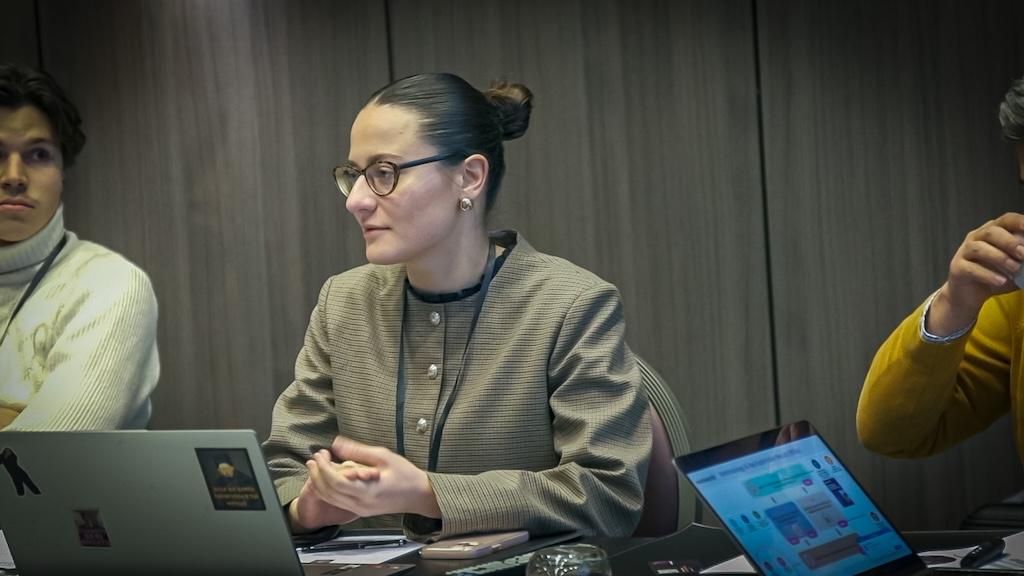
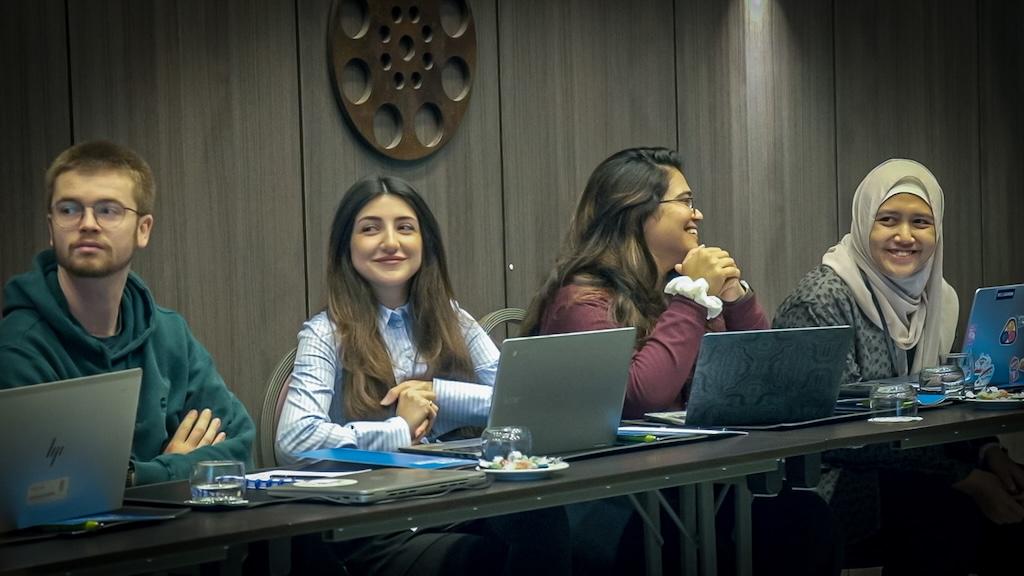
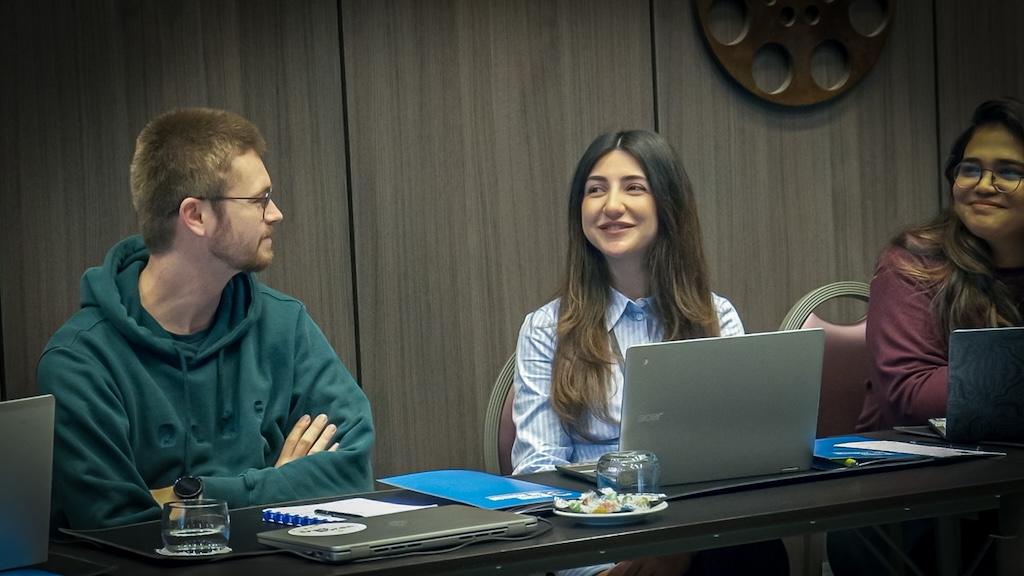
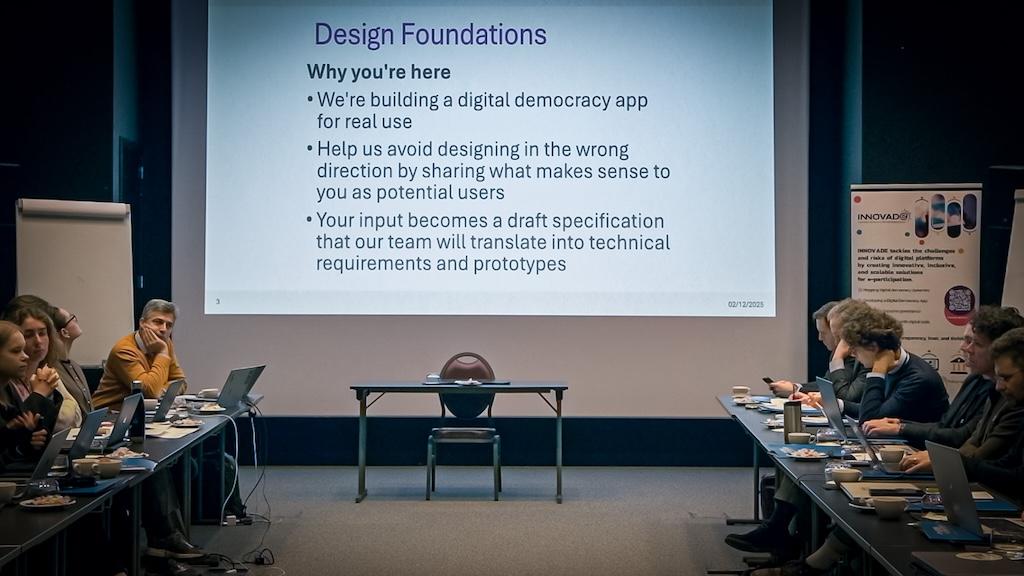
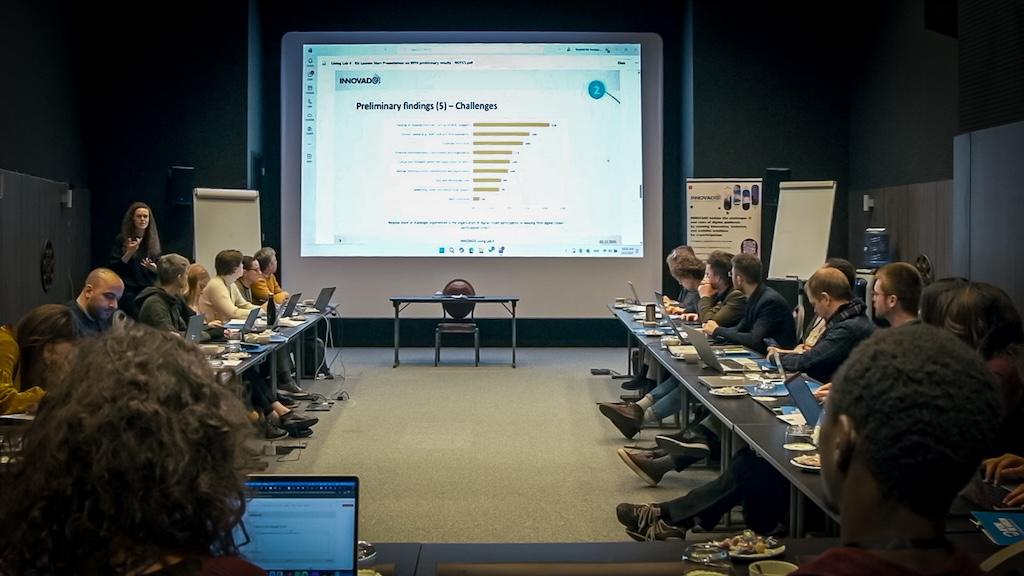
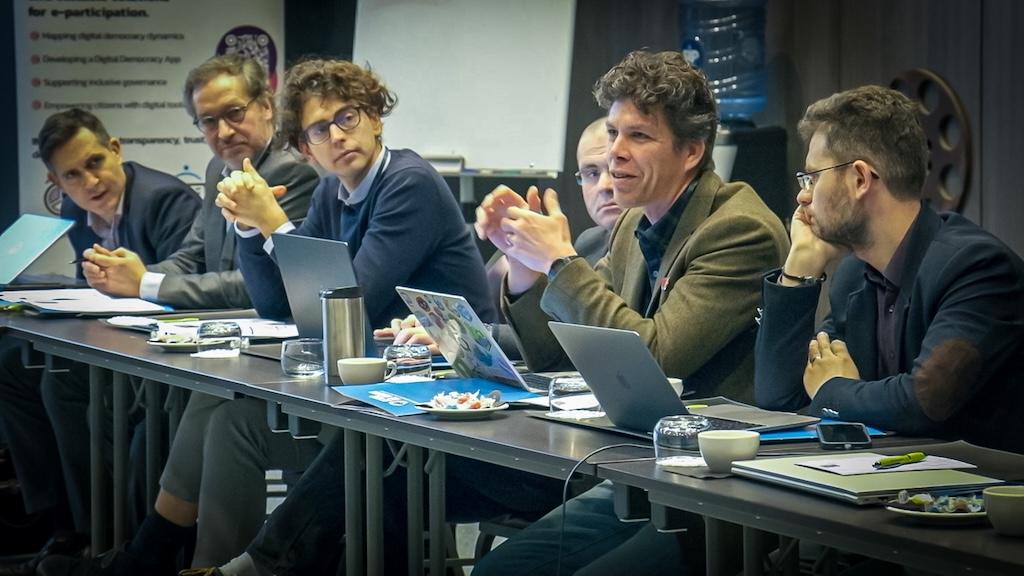
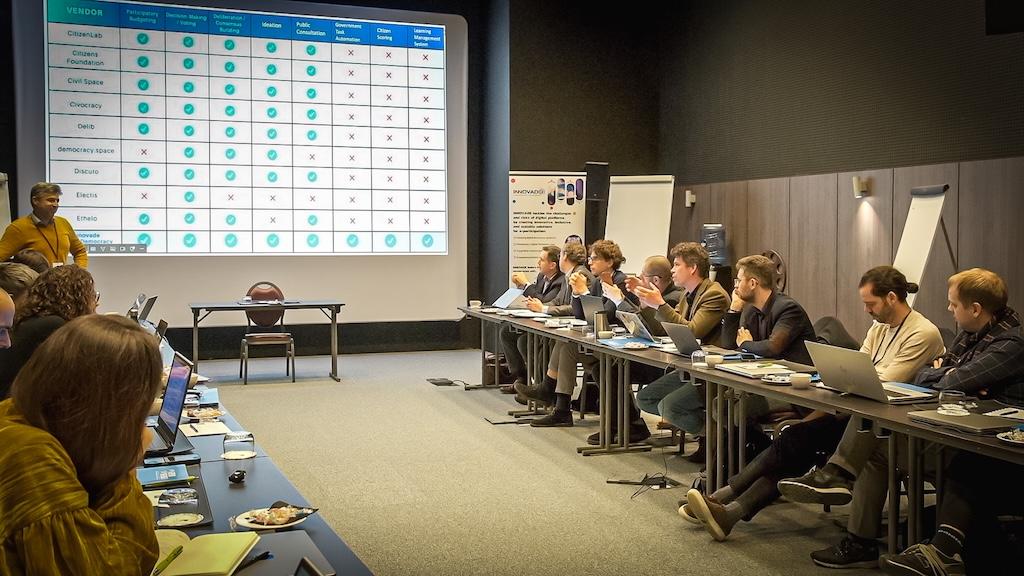
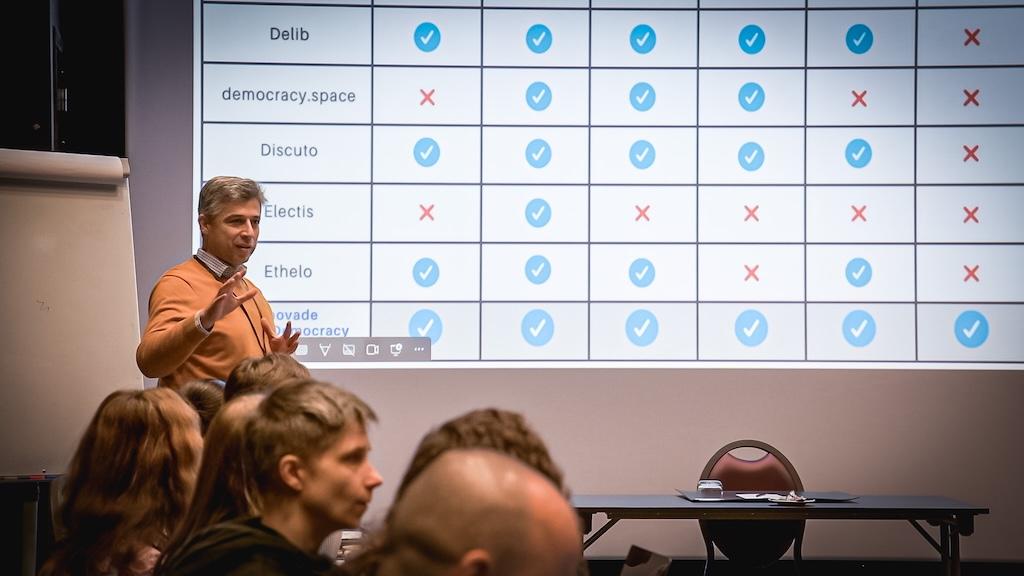
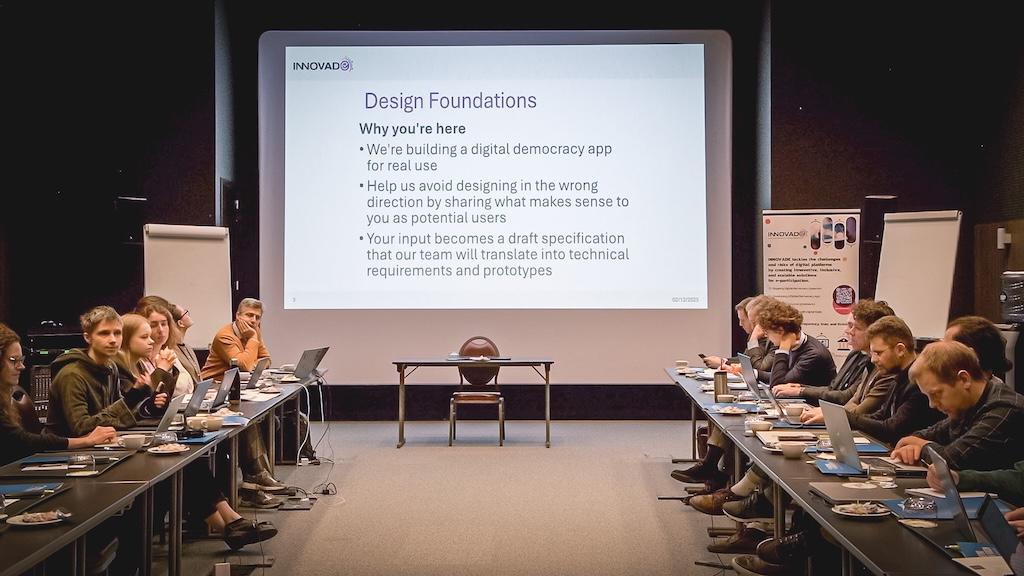
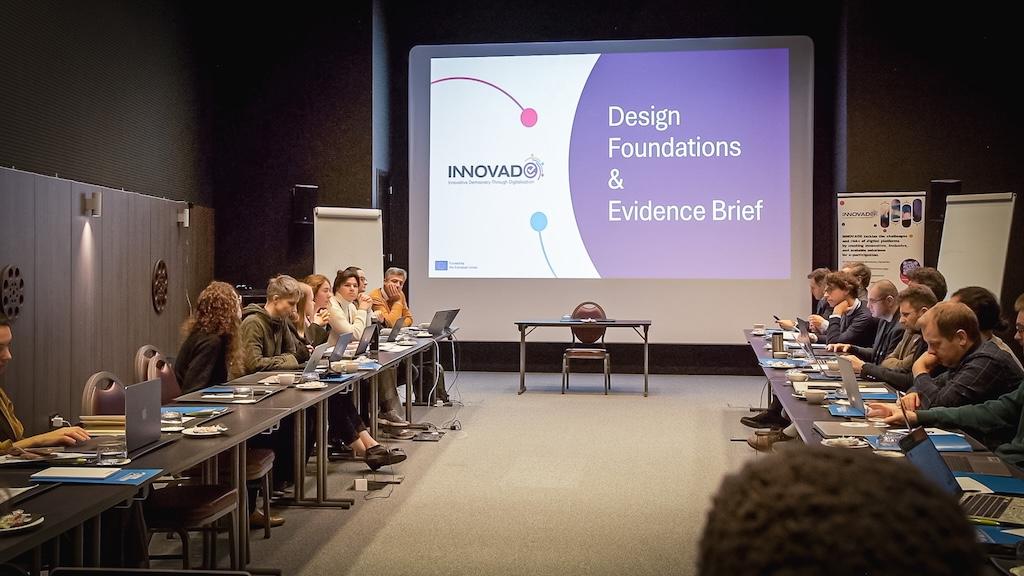
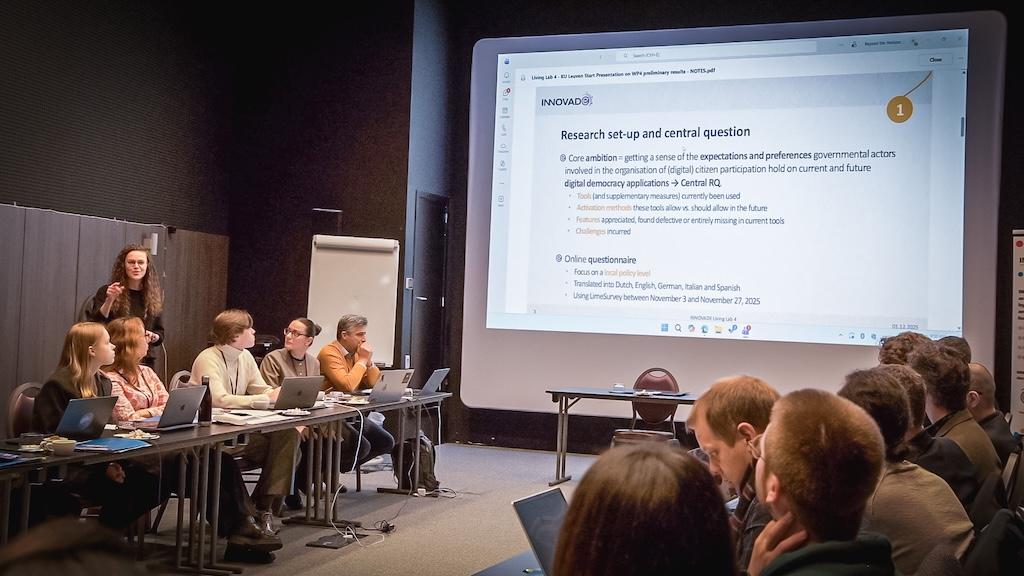
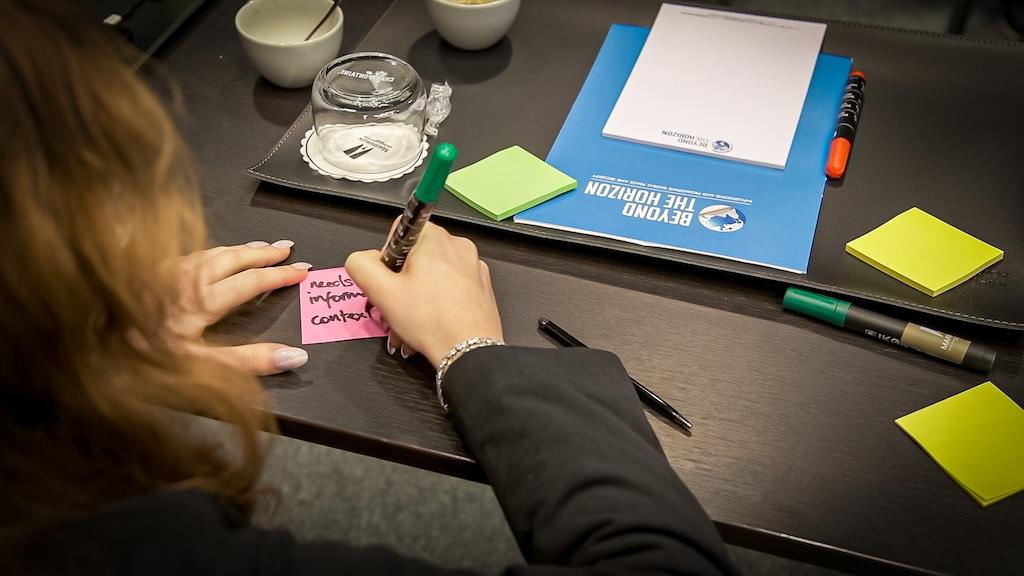
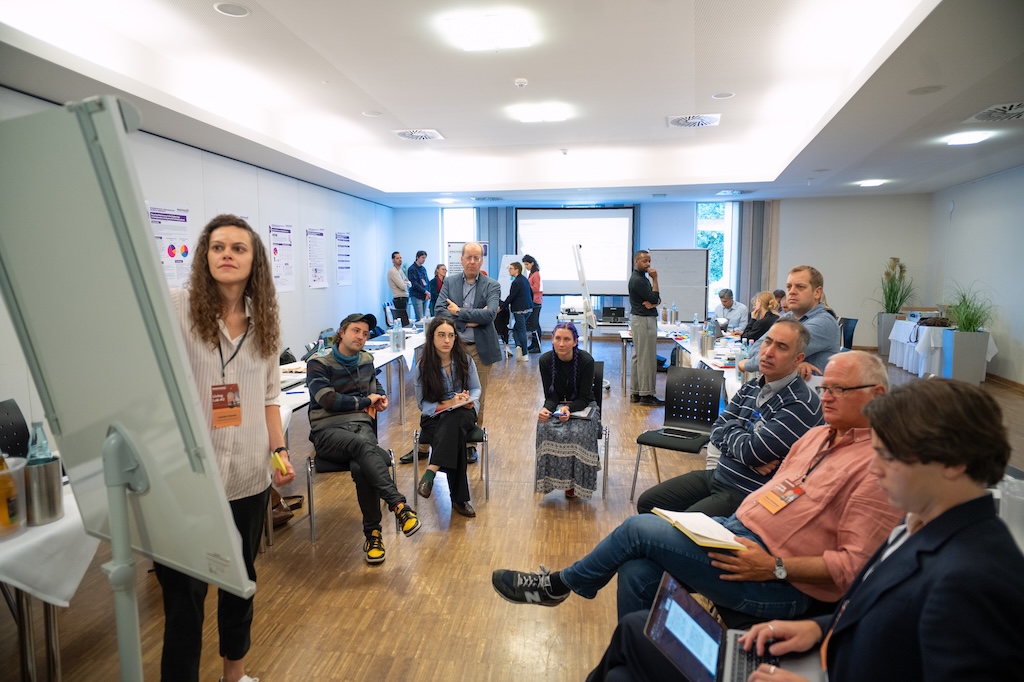
Living Lab 4, held on 2 December 2025 in Brussels, was an intensive co-creation session designed to transform insights from previous INNOVADE activities into a tangible draft specification for the new Digital Democracy Application. The primary aims of the lab were to evaluate existing digital democracy tools (such as FixMyStreet, Pol.is, and Decidim) to identify usability strengths and functional gaps, and to co-design the interaction logic for three core features: Achievements & Rewards, Hybrid Participation, and a Learning/Guidance Layer. The event brought together a highly diverse group of participants, including researchers, civic-tech experts, municipal representatives, legal specialists, students, and consortium partners. This diversity was crucial, as participants contributed both citizen end-user perspectives and practical knowledge of governmental workflows, ensuring the app's design balanced usability with realistic institutional and administrative constraints. Finally, the scope of the lab covered the transition from conceptual ideas to actionable technical blueprints, encompassing participatory evaluations, feature interaction mapping, and the creation of early-stage UI/UX sketches and prototypes to guide the application's future development.
Structure of the Living Lab
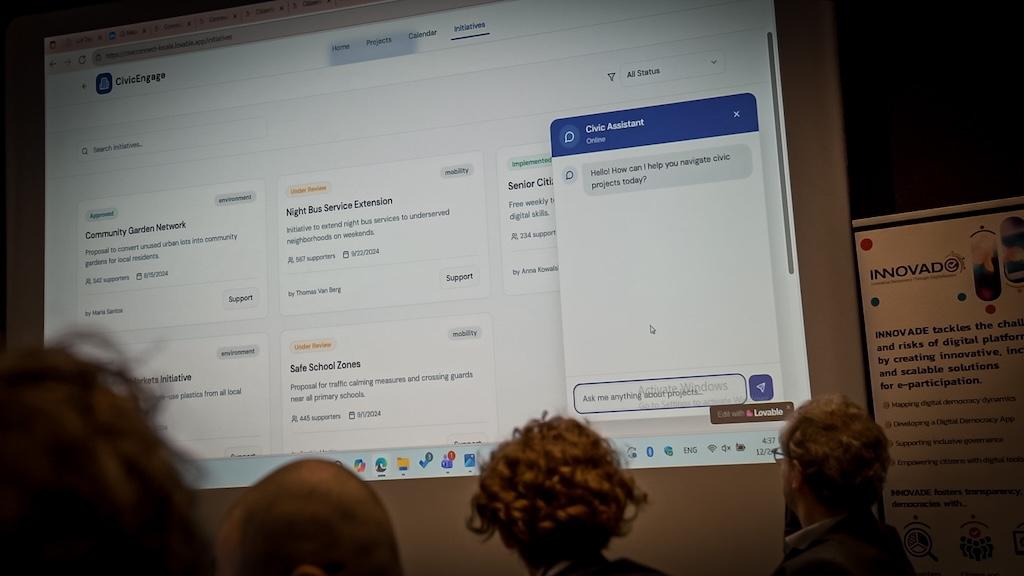
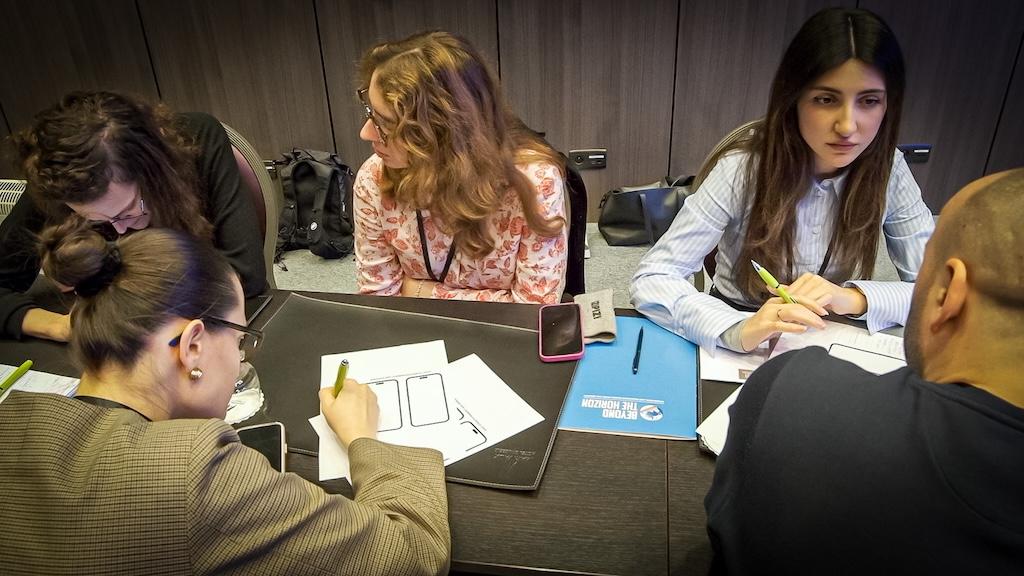
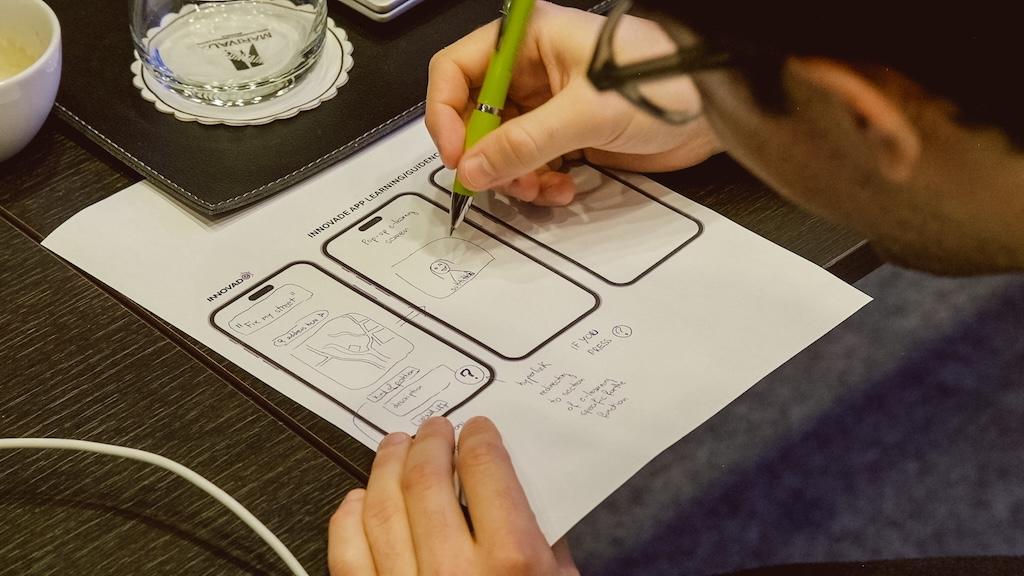
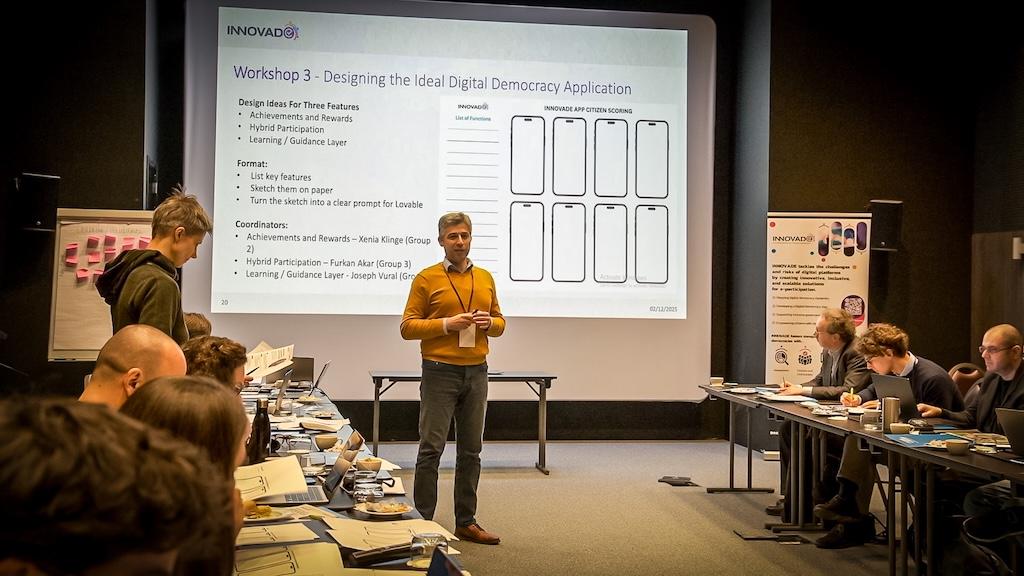
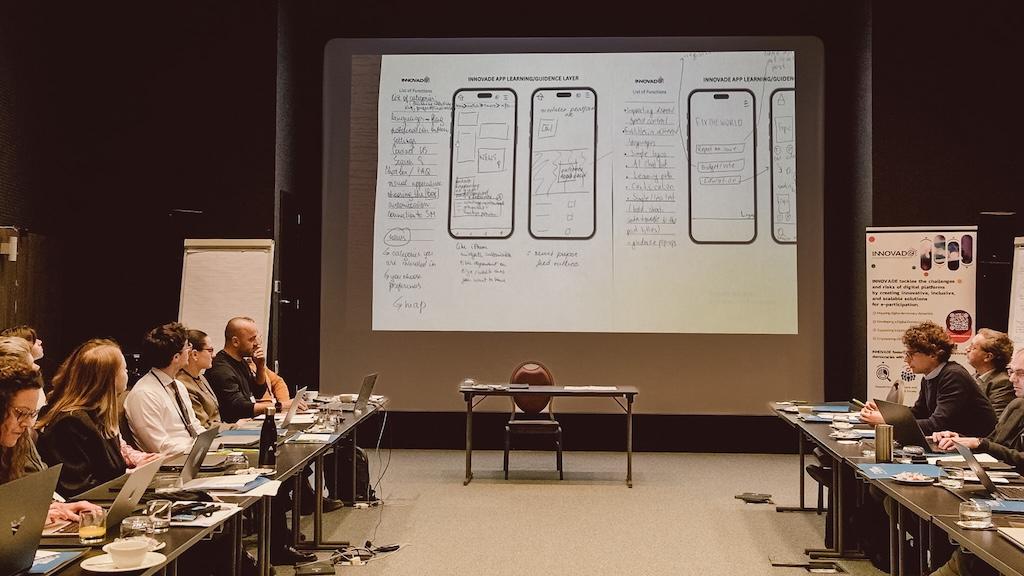
Living Lab 4 was structured as an intensive, one-day co-creation session that transitioned from baseline evaluation to hands-on design and specification building. The agenda began with a morning introduction and evidence briefing before moving into Workshop 1, where participants rotated between stations to evaluate the usability and workflows of existing digital democracy platforms (FixMyStreet, Pol.is, and Decidim) using structured evaluation boards. In Workshop 2, the focus shifted to co-designing three core INNOVADE features—Achievements & Rewards, Hybrid Participation, and the Learning/Guidance Layer—using feature interaction mapping to define citizen needs, government constraints, and dependencies. Finally, Workshop 3 tasked participants with designing the ideal application by generating feature lists, user flows, paper UI layouts, and prompts to build simple prototypes using Lovable. The day concluded with a plenary synthesis that consolidated these outputs into a coherent first draft specification (v0.1).
Access the agenda
Main Takeaways
The main findings from the lab emphasised the need to balance democratic ambition with institutional pragmatism. Participants consistently highlighted that simplicity and the reduction of cognitive load are essential for making the platform accessible to everyday citizens. Trust and transparency emerged as another major theme; participants demanded clear communication regarding moderation, data handling, and AI usage, while strongly rejecting competitive, social-media-style reputation systems that could trivialize participation. Additionally, institutional feasibility was heavily stressed, meaning the platform must integrate smoothly with real municipal workflows and validate offline engagement without creating hidden administrative burdens for local governments. Ultimately, the lab revealed that the app's core features are highly interdependent and must function seamlessly as a single, unified system connected by a consistent design language and clear accountability loops.
Based on these findings, the core recommendation is that the INNOVADE application must consistently balance democratic ambition with institutional pragmatism. To achieve this, the platform must prioritise intuitive interfaces, provide clear accountability loops demonstrating how citizen input influences institutional decisions, explicitly disclose any AI-assisted guidance, and accommodate both online and offline participation equitably.
The draft specification (v0.1) generated during LL4 serves as a grounded starting point for Work Package 4 (WP4). Rather than being a final technical blueprint, these outputs will guide development as it moves into the next phase of more detailed requirement building and iterative testing with municipalities. This ensures the final application remains a practical, inclusive, and trustworthy tool for both citizens and local governments.