ENCODE 2026
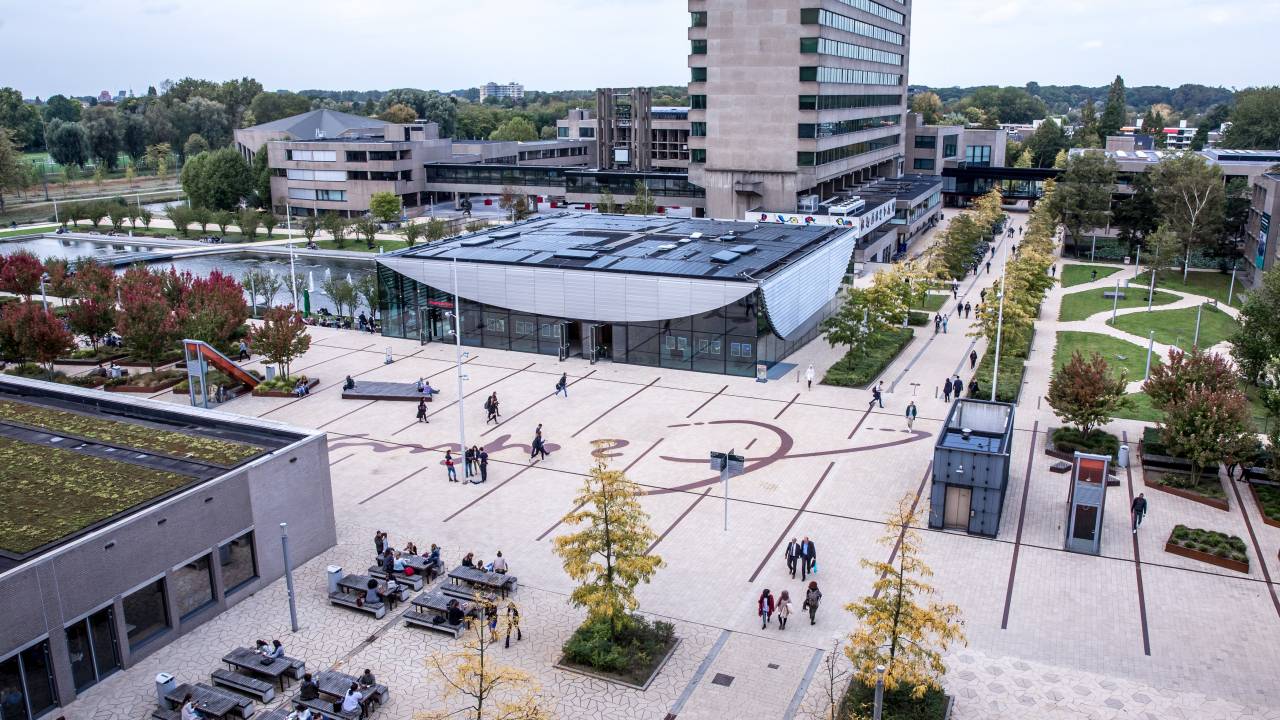
On Thursday, 12 November 2026, INNOVADE researcher Furkan Akar will represent the project at the ENCODE2026 Conference at Erasmus University Rotterdam. His talk, titled "From Platform Supply to Democratic Capacity: Evidence from a Census of 141 Digital Democracy Platforms and Ten Deployments," presents foundational empirical findings on the current composition of civic digital infrastructure and what determines whether it generates genuine democratic value once adopted by public authorities.
The findings
While deliberative and participatory processes are increasingly mediated by digital software, this infrastructure has rarely been described systematically at scale. Addressing this gap, the study draws on two complementary layers of empirical evidence: an original supply-side census documenting 141 verified platforms (130 active at verification) coded across technical and organizational attributes, and a qualitative synthesis of ten mature deployments examined across governance, inclusion, process design, technology, and administrative resources.
The census demonstrates that baseline civic technology features are no longer scarce. Voting, polling, and prioritisation mechanisms are documented across 67.4 per cent of platforms, while ideation and deliberation modules appear in 63.1 per cent. However, this supply is heavily concentrated in the private sector and governed by proprietary software. Turning from software availability to implementation, the analysis of real-world deployments reveals that the most persistent barriers to digital democracy are institutional rather than technical. Across nineteen identified challenge categories, two proved binding in nine out of the ten deployments: weak institutionalisation with limited political commitment, and insufficient municipal resources accompanied by heavy administrative burdens.
Consequently, the study finds that success does not depend on deploying novel software features. Instead, three recurring factors consistently drive positive democratic outcomes: an institutional commitment to act on public input (which proves far more decisive than the specific software selected), hybrid engagement strategies that combine digital tools with offline outreach to prevent demographic exclusion, and visible feedback loops that transparently track how contributions inform policy. These feedback loops are especially vital, as they sustain citizens' willingness to participate again far more effectively than high proposal acceptance rates.
Conclusion
The overarching takeaway for public administrations is that platform choice sits downstream of institutional design. Before adopting civic software, public bodies must establish the necessary preconditions: an explicit mandate to act on citizen input, operational administrative capacity, workflows designed for visible feedback, clear governance arrangements for any integrated artificial intelligence components, and funding structures that outlast the initial pilot phase.
In line with INNOVADE’s commitment to open science, the complete 141-platform census dataset is openly accessible under a Creative Commons Attribution 4.0 (CC BY 4.0) licence, accompanied by an interactive mapping directory on the central INNOVADE portal. Conference attendees in Rotterdam are warmly invited to attend the session in room C1-03 or connect with Furkan Akar during the event to discuss the findings and explore future collaboration.