Digital Democracy Applications: Harmonising Citizen Voices and Government Action in Europe
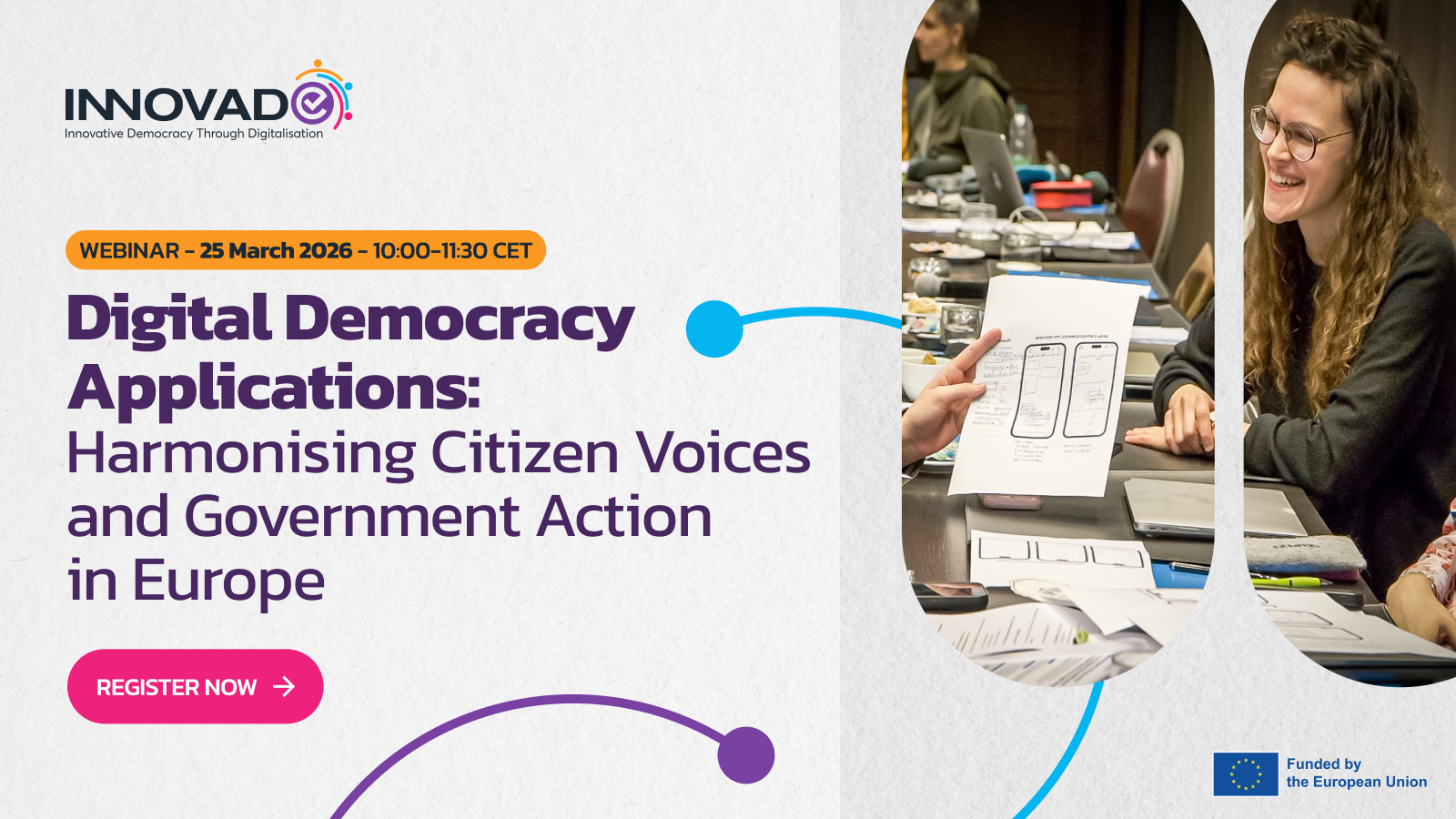
In recent years, digital platforms have promised to make civic participation more transparent, responsive, and inclusive. However, a critical problem remains: simply making technology available does not guarantee successful digital democracy. Many participation tools ultimately fail to deliver on their promises because they lack strong feedback mechanisms, fail to demonstrate visible impact, or overlook the complex practical barriers faced by public administrations. Understanding the precise needs, expectations, and limitations of both citizens and governments before developing a Digital Democracy Application (DDA) is therefore vital to ensure these technologies foster meaningful democratic engagement and do not become obsolete before they are even launched.
This event presents the key findings of the INNOVADE project's "Digital Democracy Preference Toolkit," exploring how to bridge this crucial gap between citizen expectations and government realities. The session will guide attendees through a comprehensive analysis of both front-end user needs and back-end administrative requirements.
Speakers from DFKI, and KU Leuven will break down the report's insights, which were gathered through a mixed-methods approach blending European citizen surveys, participatory workshops, and governmental assessments. The agenda features:
- The Citizen Perspective: An exploration of what the public truly wants, moving beyond tokenism to highlight demands for transparency, trust, and features that deliver real, visible impact on local decisions.
- The Government Reality: A look into the practical barriers public entities face—such as staff shortages, budgets, and entrenched organisational cultures—alongside their aspirations for deeper citizen co-production.
- Designing the Future DDA: A collaborative session bridging these two viewpoints, providing actionable design recommendations (such as hybrid participation models, transparent feedback loops, and user-friendly "Plug & Play" tools) to build the next generation of inclusive and effective digital democracy platforms.
Agenda
- 10:00-10:05 Introduction – Diego Domenici (Trust-IT Services)
- 10:05-10:25 What the Public Truly Wants - Xenia Klinge (DFKI)
- 10:25-10:45 The Government Reality - Laurien Coenen (KU Leuven)
- 10:45-11:15 Designing the Future DDA - Laurien Coenen (KU Leuven), Xenia Klinge (DFKI)
- 11:15-11:30 Interactive Q&A and What’s next